The GCE (A-Level) is a UK qualification awarded to students following the completion of 2 years study during sixth form or college (equivalent to the last two years of high school). It is offered by various examination boards, including Edexcel, AQA, OCR and Cambridge (Cambridge Pre-U). Depending on the school, students may follow different examination boards for different subjects. Every subject offers 1 year of AS study, after which most students continue with 3 to 4 subjects through to the end of the full A-Level course. Students should select A-level subjects based on their personal interests, academic strengths, and the preferences stated by their desired university program. For example, students who intend to do Medicine should include Chemistry and Biology in their subject combination.
The GCE A-Level is widely recognized by top universities, including prominent institutions in the US, UK, Canada, Australia and Hong Kong.
To prepare for the challenging GCE A-Level program, students should focus on improving both their spoken and written English during the early years of high school, in addition to the foundational elements of other disciplines (such as Maths and Science) if they are relevant to their further study.
How Cana helps students excel
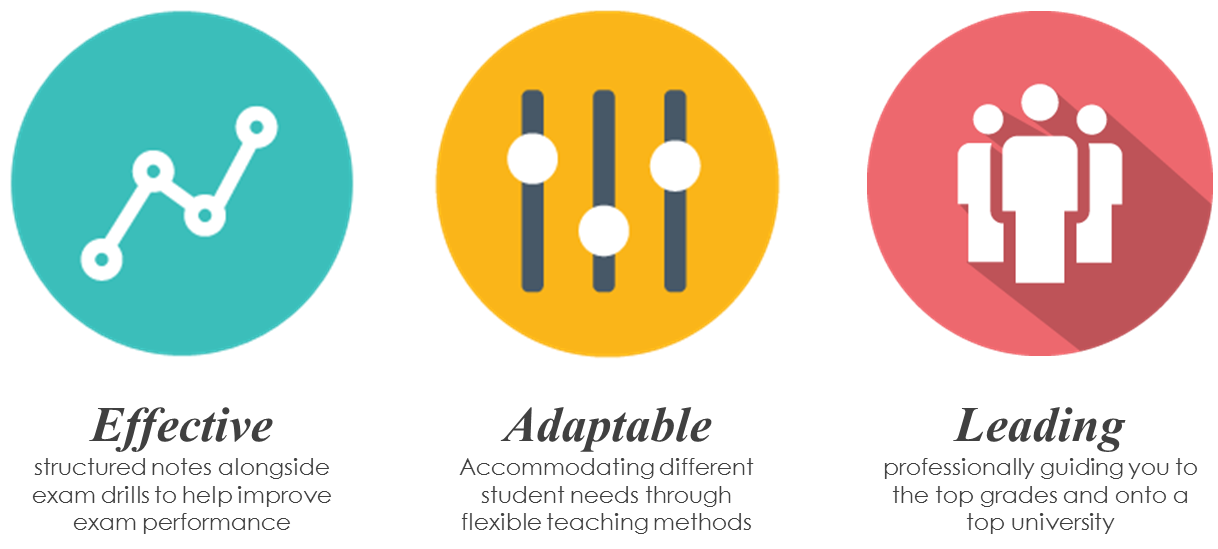
Cana’s effective, adaptable and industry leading tutors will apply both their expertise and care to help students achieve their full potential. They effectively prepare for classes using their experience and proficiency. They adapt to each student individually, tailoring their lessons to both instruct, educate and challenge. They are not only tutors but guides that aid student beyond their examinations, giving them a head start on the academic expectations of higher education.
Most students take regular lessons once or twice a week, which are supplemented by intensive courses during Christmas, Easter and summer holidays to achieve even higher academic results. Students who join Cana’s university application consultation package also receive close guidance throughout the whole process. With Cana’s aid, students are able to juggle both their university applications and school deadlines effortlessly.
CANA’s GCE A-Level track record
90% of our GCE A-Level students received an A or A*. Our students have been admitted into leading universities, including Cambridge, Oxford, Columbia, Cornell, LSE, Princeton, UCL, Durham, Warwick and others.
Commonly Asked Questions
Most universities require students to take three AL (A level) / IAL (International A level) subjects. For students who have gotten used to studying 5 or so subjects, it can be difficult to narrow down the options to three. That’s why it’s beneficial for a student to base their choices on their area of interest for university study and their future career. For example, if a student wishes to pursue a career in medicine, they will need to take AL / IAL Chemistry and preferably Biology. Both are needed for UK medical schools. However, please note that different schools may have distinct requirements. The same logic applies for other subjects. If a student wishes to study economics or engineering, they will probably need A Level Further Mathematics. If a student hopes to enter a top Law school like LSE, they may require a combination of science, maths, and humanities. Such institutions target candidates that demonstrate excellent logic and superb writing skills.
However, when a student is unsure about what to study at university, it would be best that they leave their options open. They should instead think about various subjects they might enjoy studying, and then choose a combination of subjects that allow for flexibility in their final decision.
A common question students ask is: ‘Three AL / IAL subjects fulfil the requirements, but are three A-levels enough to get me into a good university?’ Usually, the answer is yes. But if a student wants to demonstrate their strengths as a learner and they believe they can handle the workload, then they may choose to do four subjects. Some HK schools do require four subjects on a conditional offer, but students will find that even the top UK schools (Cambridge, Oxford, London School of Economics (LSE) , Imperial, UCL etc.) typically formally require three A-levels.
Yet, these requirements change if a student wishes to study medicine in Hong Kong; for example - medical students in Hong Kong are required to have four A-levels. In addition, The Chinese University of Hong Kong does not consider Chinese as a qualifying subject, and counts the combination of maths and further maths as one subject for medical applicants. Students in this specific scenario must be careful to choose subjects that fulfill the requirements according to their universities. In most other cases, three A-levels are enough.
If you have studied in Hong Kong all your life and are now planning to go to the UK to study for GCE/A-level or GCSE exams, the transition can be intimidating. Facing the prospect of an English-only environment, many students wonder if the change is difficult to handle. For students studying sciences, a large part of the change depends on what language you used in class in Hong Kong.
If your Biology, Chemistry, or Physics classes were conducted in Chinese, then you may initially find it challenging to understand your teachers in the UK. Even the simple Chinese terms that you learnt in cell biology will each have an English equivalent to learn, e.g. 線粒體, 葡萄糖, 胰臟 etc. will become mitochondria, glucose, and pancreas, respectively. In the beginning, you may have to relearn all the scientific terms you already learnt, which can be stressful and demotivating.
Moreover, even if your classes in Hong Kong were conducted in English, be aware that there are many different accents in the UK. For example, you might come across Scottish, Irish, or RP (how the queen speaks) accented English, or have Indian or Polish teachers. Even though you understood your teachers in HK, you may not be used to these new accents in the UK. In addition, it’s likely that teachers in the UK will speak English faster than you’re used to, so there will definitely be an adjustment period.
Some students may also fear that their lower proficiency in English puts them at a disadvantage for exams. There are a few things to remember here:
When you write responses to exam questions, these syllabuses will usually require you to write full sentences, so you cannot use bullet points.
Many students worry that their grammar is flawed and might affect their grade. We advise you not to worry, because examiners actually don’t care too much about it (unless you’re taking an English exam). UK syllabuses usually have international versions (International GCSE, or International A-level) and examiners are aware of second-language English students. The UK has many immigrants and students from different nationalities in their schools and it is very difficult to demand perfect grammar from all of them. As a general rule of thumb: As long as your grammar isn’t terribly wrong and doesn’t detract from your answer’s meaning, then there is nothing to worry about.
Sometimes the English terms you used in the exam aren't entirely correct, e.g. you heard the term and spelt it wrong based on how it sounds - don’t worry, examiners often accept these answers as well! They are assessing your scientific knowledge and not your English, so there is some flexibility allowed.
Overall, if your classes in Hong Kong were conducted in English, and you completed homework assignments and exams in English, you will probably be completely fine when switching to the UK curriculum. If your classes in Hong Kong were conducted in Chinese, you may have some small difficulties with in-class lectures, written responses, long-form questions, and article-based exam questions. But keep studying and after a couple of months, you will be able to adapt well and get used to the new language environment!
GCE A‑Level (General Certificate of Education: Advanced Level) and International A‑Level (IAL) are both highly respected upper‑secondary qualifications taken before university. While they are academically equivalent and equally recognised by leading universities worldwide, they differ in structure, exam boards, subject availability and examination schedules.
GCE A‑Levels are primarily offered in the United Kingdom and are typically assessed through cumulative final examinations taken at the end of two years. In contrast, International A‑Levels are designed for schools outside the UK and are usually assessed in modular units, with multiple exam sessions available each year. These structural differences can affect subject choice flexibility, retake opportunities and overall exam strategy.
Understanding the similarities and differences between GCE A‑Level and IAL is important for students deciding which pathway best suits their academic goals, location and preferred assessment style.
Available exam boards
GCE A-Levels have relatively more exam boards compared to IAL. There are five available boards from the UK, including AQA, OCR, Edexcel, GCEA, and WJEC. IAL only has three available exam boards, including Cambridge, Edexcel, and AQA. Note that Cambridge has no available GCE A-Level curriculum. They only offer IAL and Pre-U, an alternative qualification equivalent to the GCE.
Subject differences
Each exam board and curriculum offers various topics. If you choose to take GCE A-level, then you will have relatively more subjects to choose from across the available exam boards (AQA, OCR, Edexcel, GCEA, WJEC). For example, Edexcel offers both GCE and IAL. If a student wants to take Edexcel Chinese or Statistics, these are only offered through Edexcel GCE, not IAL. Oxford, AQA also offers both GCE and IAL.
Cambridge (CIE) is a little different from the others. It does not offer GCE A-Level, but has an alternative curriculum called Pre-U. However, Cambridge is advantageous because it focuses on IAL, offering 67 topics. For example, if you wanted to take Chinese at IAL, you would only be able to take this subject with Cambridge.
Though GCE in general has more topics than IAL, the most popular and mainstream subjects will still be available across all exam boards and syllabi, e.g. Maths, Sciences, English, Economics, etc. If a student is interested in a more niche subject, they can look up specific exam boards.
Overall, students who choose to take GCE have more options for topics and various exam boards, but even IAL students can access many topics, especially those offered by Cambridge (CIE). However, please be informed that the decision of the exam board is mostly made by the school a student chooses to attend.
Examinations
GCE A-levels are assessed cumulatively. This means that a student studies the curriculum for two years and takes the final exams all in one go. GCE A-level final results are separate from AS Level results.
In contrast, IAL is assessed by units. For example, in IAL Edexcel science, a student can take an examination covering three units which counts as an AS result, then add on an extra three units. Three AS-Levels units and three extra units count as an entire A-level grade.
Students often prefer the unit-by-unit structure for exams because it is more straightforward, and arguably easier. They can finish reviewing a unit, take the examination, and leave it behind to focus on the next units. Cumulative exams like the GCE A-level finals are more challenging, where students must remember everything they learn over two years.
Exam schedules for GCE A-level also differ from International A-Level. For GCE, a student can only take exams once a year, during the May/June finals period. In IAL, they have 2-3 chances annually to take exams, typically in January, May/June, and October. May/June is the main examination period. Multiple examination periods are beneficial because it is easier to retake exams. For example, if a student did poorly in their GCE finals,they must wait an entire year to retake them. This may affect university plans and, in worst case scenarios, they may start their postgraduate studies a year later. In IAL, exams are by unit so a student can target the exact topics that they tested poorly in and retake only that exam a few months later. For example, a failed exam in January can be retaken in May/June. They will have a chance to improve their score without delaying any university arrangements.
Reputation
Lastly, parents and students may wonder if there are any differences between GCE A-level vs International A-level in terms of recognition or reputation. The GCE and IAL certification is equal according to universities worldwide, which assess them equally based on student grades.
The above discussed the general differences between GCE A-level and International A-level. If you want to know more about subject-specific differences across the two curricula, please browse the subject specific page for the GCE A-level and please do not hesitate to contact us if you have any questions.
Generally, schools will only offer students the International Baccalaureate Diploma Programme (IBDP) or General Certificate of Education Advanced Level (GCE A-Level), leaving students with little room for choice.
A-Level (or International A-Level) is a longstanding and well-respected upper-secondary program that originated in the UK and is widely used there. The IBDP is a similar program, known for being rigorous and academically challenging. It is popular among international schools outside of the UK. Although both programs are equally recognised and beneficial for university admissions, IBDP has gained a reputation for being more difficult. Below are some key differences between IBDP and A-level.
Differences
IB
A-Level
Requirements
6 core subjects: one from each of Mathematics, Sciences, The Arts, Individuals and Societies, Language acquisition and Studies in Language and Literature. Many schools allow double sciences, at the expense of ats.
Theory of Knowledge (TOK), the compulsory seventh subject that fosters students’ ability to inquire about and analyse their own learning process and knowledge acquisition.
CAS: compulsory extracurricular activities totalling 150 hours of Creativity, Action, and (Community) Service over two years of IBDP.
EE: Extended Essay of 4000 words on a specific topic of choice, meant to imitate a university thesis.
3-4 subjects, depending on the school. 3 subjects are required for the standard admission process for UK universities.
An optional AS Level, which can count towards a final grade or not, depending on whether a students is taking UK A-level or IAL*
The optional Extended Project Qualification (EPQ), which is similar to IBDP’s EE. It allows students to pursue a project through self-directed research, encouraging critical, reflective, and independent learning. It is highly valued by universities.
No specific requirements for extracurricular activities
Grading system
Individual subjects are graded from levels 1-7, with level 7 being the highest grade.
The total IBDP score is graded out of 45: 42 points for level 7s in all 6 subjects + 3 points for TOK, CAS, AND EE combined.
Final exams are held at the end of two years and usually encompass all material learnt in the course. These are externally assessed.
Courseworks are internally assessed, and each subject has one or more.
Individual subjects are graded from grades A-E, with the lowest passing grade being E and the highest A*.
A* is 90-100%, A is 80-89%, B is 70-79%, etc.
Grade U stands for Undefined, which is a failing grade.
Many A-level courses are assessed entirely through exams held at the end of two years. AS levels can be taken after one year.
No subject has a coursework component more than 20%.
Subject difficulty
Though taking six core subjects results in a much higher workload, students have some control over the difficulty of individual subjects - students typically take three subjects at Standard Level, and three subjects at Higher Level. For example, IBDP Maths is divided into four levels: Maths studies, Maths SL and HL, and Further Maths.
Individual subjects may go into slightly less depth than their A-level counterparts.
However, considering the number of subjects and additional requirements, IBDP has a much heavier workload than A-levels.
IBDP is difficult because of the amount of subjects students must juggle. Because of this, students might score poorly on subjects they are normally good at, because their attention is spread out too broadly.
One level of difficulty per subject, though there are slight differences depending on examination board.
There are no restrictions for subject selection, so one can choose to be as broad or specialised as preferred. For example, one student may choose Psychology, Physics, Drama, and French. Another student may choose English Literature, History, and Politics.
Fewer subjects allow students to focus their interests and excel in each subject. It is arguably easier to get good final results in A-levels compared to IBDP.
Preparation for university
IBDP is believed to be better preparation for university than A-level.
IBDP fosters independent inquiry, rigorous research skills, and gives students a taste of the thesis-writing process.
It also creates more global-minded graduates, which may better prepare students for university admissions interviews or studying in another country.
IBDP is a tough challenge, but if a student can overcome it, they should have an easier transition to university.
US universities like students to be all-rounders, and so prefer IBDP students over A-level.
A-level may not prepare students completely for the enhanced workload and stress of university.
However, it allows for students to progress at a slower, more natural rate. This is preferable for many learners.
A-level students will generally be less exhausted after their course, compared to IBDP students. They are less likely to get burnout.
UK university courses are highly specialised, as such, they prefer A-level students over IBDP.
Personal growth and school-life balance
IBDP is very academically challenging, but it also teaches students:
Good time management
How to be an all-rounder
Their role as a global citizen
Awareness of their communities
Every IBDP student will probably feel overwhelmed at some point. The high stress environment can be helpful or motivating for some, and absolutely unhelpful for others. It depends on personal preference and learning style.
A-level is overall less academically challenging than IBDP, but leaves students with enough time for a social life, part-time work, or development of personal hobbies. In comparison, IBDP leaves little time outside of school and extracurriculars.
A-level students are also less likely to be overtaxed by studies, which is beneficial for their mental health.
*If you are interested in the differences between A-Level and International A-Level, click here.
Overall, whether a student is more suited to IBDP or A-level depends on personal preference. IBDP is preferential if a student does not know what subjects to specialise in, if they wish for a well-rounded education, or are confident in organising their time and juggling multiple subjects. A student should consider A-levels if a lower-stress environment is more helpful for their learning, if they value specialisation, or if they are determined to do further education in the UK.
If you or a friend or family member is considering making a change in academic institution or even moving to a school overseas, please feel free to contact CANA Elite for advice from one of our many academic experts. Likewise, whether A-Level or IBDP, CANA Elite’s skilled tutors can help students achieve their educational goals in both the A-levels and the IBDP.
Here at CANA Elite, we truly believe that every student is unique and has the potential to reach their goals with the right guidance. Academic excellence is derived from both passionate teachers and eager students. That is why we provide a unique learning experience tailored to each individual student. Named after the location of the first miracle in the Bible, we hope CANA elite can be the place of miracles for all our students, allowing them to achieve their dreams.